The Beat of a People
- Renee Ellis
- Oct 8, 2022
- 8 min read

Updated: Oct 27, 2022
Music is a connector of people. Even if there is a language barrier, the beat, and the rhythm is enough to get someone up and dancing. African Americans have been tied to music for hundreds of years. Like a lot of African American culture, the ties between African Americans and music have been so strong that whole new genres in America have been created. And so has a strong pillar of the African American culture.

Pictured: Ella Fitzgerald
"Like a lot of African American culture, the ties between African Americans and music have been so strong that whole new genres in America have been created."
The history of music within the African Americans culture is deep and complex but it is important to understand. It is also very important to realize that African American music is just an umbrella term. Yes, there are some genres underneath that umbrella that are more popular than others, but their popularity does not invalidate the other genres' history and connection to African American people.
We cannot change the past but understanding the past can help us to better understand our present, and prepare us to better our future.
History and Context
Beginning to understand music within the culture starts at the slave trade. Africans were uprooted from their homes and countries and endured a gruesome travel over the Atlantic to America. In America, many were separated from their families and people they knew and sold on auction blocks. They did not have any rights and were considered property. On the plantations, save a very small few, African Americans were beat, misused, abused, lynched, and raped. There were forced to work in terrible conditions and they were restricted in ways that are hard to comprehend today.
Their forced relocation, and the place they were relocated to, both influenced the creation of African American music. The beats, and instruments that African Americans created stems from instruments and music from Africa. Still in today's society, a lot of the music and culture that African Americans have come from the history of slavery and from Africa.

From the banjo to certain drums, African roots are the center of a lot of the music we listen to today even though slaves couldn't freely express themselves in their music. Slave owners did not want Africans to use their native languages or drums. They knew it was a form of communication and they were fearful of the slaves running away to freedom. But they still held on to the power of song. To keep hope and moral alive, African Americans used the music that they knew and the little connections that they had back to Africa, as a form of communication, as a helper, but also as a soother of the soul. Chattel slavery was harsh by all means but music was a solace. They shared their stories through the songs they sang. Music was also used as a passer of time.
"Chattel slavery was harsh by all means but music was a solace."
Songs and rhythms were passed down through many generations by word of mouth. After the events that happened in 1831 lead by Nat Turner, many states made a law stating that it was illegal for slaves to be educated and to learn how to read and write. Slaves had to still communicate and share their music so everything was shared orally. Like many things shared by word of mouth, there are variations due to slight changes based on who is singing it, when, and where, but everything still ties back into the African culture and roots.
Singing techniques like the call and respond song approach and the immersive style of singing were created through slavery. Styles of singing today are usually chosen based on personal preference but the call and respond technique used by slaves had a purpose of helping them with the work they were doing. When slave owners heard the slaves singing in the field they were comforted knowing that they were working. Some slave owners even went as far as saying that because they were singing they were happy and content with the lives they were forced to live. For the slaves however, the call and response technique aided them in their work. Explained by Encyclopedia.com, "Emphasizing the call-and-response pattern with the leader outlining the song's theme and the rest of the crew responding, work songs guaranteed a steady rhythm, resulting in the work proceeding at an even pace. Also when axes and hoes were being used, the call-and-response of work songs lessened the possibility of accidents by coordinating movements."
There were other songs and forms of singing used that served purposes as well like field hollers. The first ever recordings of field hollers were recorded in the 1930s. Many believe that field hollers were the beginnings of blues music.
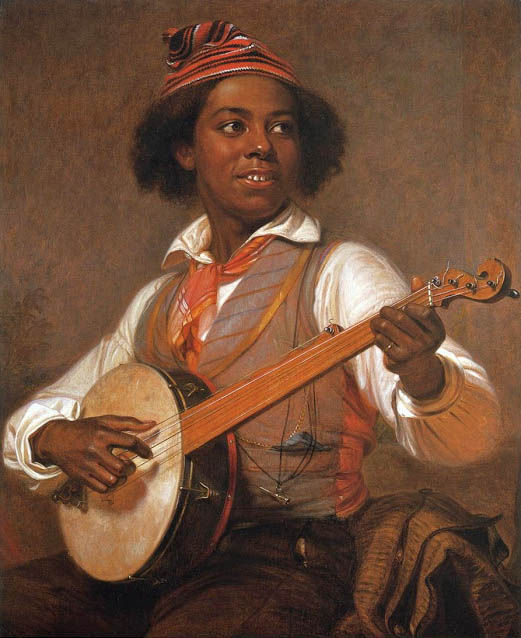
Many modern day instruments come from the slaves times or can be related to slave times. However, nothing quite had the long lasting effect as the banjo. The banjo has stayed relatively the same over many, many generations and is directly from slavery. The earliest report of it was in 1653 in the West Indies. It was called a different name then, but it was still an African instrument. In the following decades the instrument still maintained a large sense of popularity. The instrument eventually started to make waves in the arts. In an 18th century painting, slaves were painted dancing around a 5-string banjo. Furthermore, from 1843-1883, minstrel shows were the most popular form of entertainment in America. Blackface, stereotypes and offensive portrayals of African Americans were the base of this show but they featured a banjo in some shows. Even though the shows were incredible offensive and racist towards African Americans, the most popular style of banjo playing today called the "Scruggs style" originated from these shows.
There were other instruments that Black slaves played that weren't African such as the fiddle, however, the popularity of those instruments did not stick with the culture quite like the banjo and African drums.
Black Music Today
The genres of music that are associated with the African American culture are usually what people think of when talking about Black music. Rap, rhythm and blues, and gospel are usually the genres come to mind but pop music, country, and jazz have been heavily influenced by African Americans as well.
There are a lot of people in the African American community and in the music world that feel as though a lot of music that is popular in America has been whitewashed and credit has been stolen from African Americans. (Ex. Elvis Presley being crowned the King of Rock N' Roll even though the movement was catapulted by African Americans.) Because of this African Americans are quick to protect and defend their music. The history that Black people share is too deep and too important to give up. The information that is known is valuable to the African American culture because unfortunately, a lot of history has been poorly documented and has not been shared in school environments. Many communities do not know the history and why music like rap and hip hop is so important to Black people.
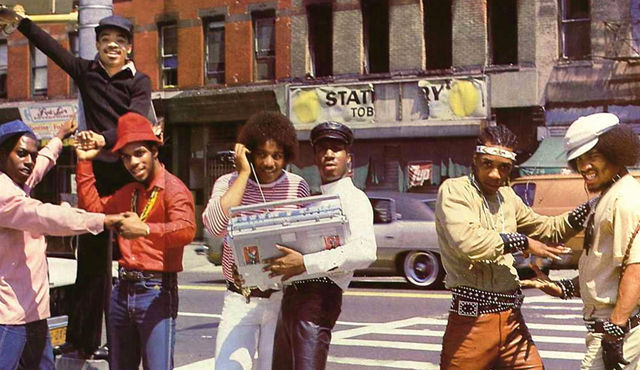
For the most part, rap and hip hop, is still considered "Black music" (even though that can be very offensive) despite it's global popularity. From popular music of course, to fashion, to even food and food trends, hip hop has had a hand in influencing a lot of culture. Born in New York, Black, Hispanic, and other marginalized communities, adopted rap music as a form of freedom and artistic creativity. At block parties in New York City, DJs took beats and percussions from funk, soul, and disco music and extended them. Scratching, and turntables became popular, and when MCs started to rhyme and talk over the beats, rap music and hip hop was created. Some dismissed the new style, but when songs like "Rapper's Delight" by The Sugarhill Gang and "The Breaks" by Kurtis Blow came out people saw it's potential to be a hit. And it most definitely was.

Still to this day, rap music is one of the most popular genres of musics, but to many African Americans, it is more than rhymes and a good beat. Rappers have begun to speak on the issues that impact the oppressed in this country. Racism, corrupt policing, drug usage, murder, violence, are just some of the topics that rap artists have made music about. To some these songs are bad influences for the younger generation, but to others hearing that others are struggling and fighting for the same issues creates a sense of hope that they are not alone.
Furthermore, rap and hip hop is one of the only genres of music that Black people have been able to really run in this country so keeping a hold on the genre for some African Americans is keeping a hold on a sense of power.
However, not all rap music speaks on the struggles of African Americans and the empowerment of oppressed people, and it is very true that a lot of rap music is vulgar. However, one should not throw away the entire genre. For many years, hip hop has been the genre of liberation. Even today, societal, political, economic, and governmental issues have been exposed in mainstream media due to rap music. And blues music shares a similar origin story. After the Civil War, African Americans took bits and pieces from other genres of music like ragtime, field hollers, and more to create a whole new sound. This sound was a tool what allowed African Americans to speak about the struggles they were going through. The period of time after the Civil War was not easy for African Americans despite newfound "freedoms". But yet again, African Americans created a new sound and genre to connect with one other, communicate stories, and to inspire a sense of freedom within the culture.
"Music is a connector of people. Even if there is a language barrier, the beat, and the rhythm is enough to get someone up and dancing."
Rock n' Roll, gospel, and jazz all have their origin stories as well, but the bottom line in music is almost like heartbeat of the African American culture. It is how Black people express themselves and their culture. The history of music runs deep among the people and there is yet so much to learn. How each genre of music is seen varies person to person but it is important to not throw away a particular genre or style of music. Instead learn the history, and learn why that music is so important to its people. We all listen to different things and our own personal ties with music is a part of who we are. Like mentioned earlier, music is a connector of people. But we must learn why are people connected to it. What is it's importance in society, and how can we grow from simply listing to a song.
I asked a few questions to another Apollo student to get their perspective on African American music:
Inaya Refat
Grade 11th
Age:16
**text messages**
Me: Hey! Do you mind answering these questions for my project:
-What do you think if when you think of African American music?
-Do you listen to African American music?
-Do you think African American music is different from mainstream music? If yes, how so? If not, how so?
-What type of music do you listen to?
-If you do it listen to African American music would you want to?
Inaya:
1) I don’t know how to answer this one! But my perception of it probably stems from multiple cultures. When i think of it I think of jazz, primarily Louis Armstrong. It kinda reminds me of mellow and Tina Tuner type music where I feel comforted.
2) Honestly I’m not sure but I don’t think I listen to it.
3) Definitely different. The language and style is just completely different to mainstream. Based on my perception, I think they use wording that only a certain group of people understand. Like references you may understand but I won’t. I also think the instruments used are not always popular in mainstream media.
4) I listen to a lot of contemporary and pop music. Some artists that I listen to on the daily are Taylor Swift, Lizzy Mccalpine, Gracie Abrams, ABBA, Queen etc. but a lot of it is also desi cultural music. Overall I’m kinda all over the place with my music taste so I don’t like to restrict it to one distinct genre!
5) I would love to listen to it. I’m always open to music, with a few exceptions. I’m not sure how much I will like it, and I mean no offense, but I’m always willing to give it a whirl! ”


Comments